
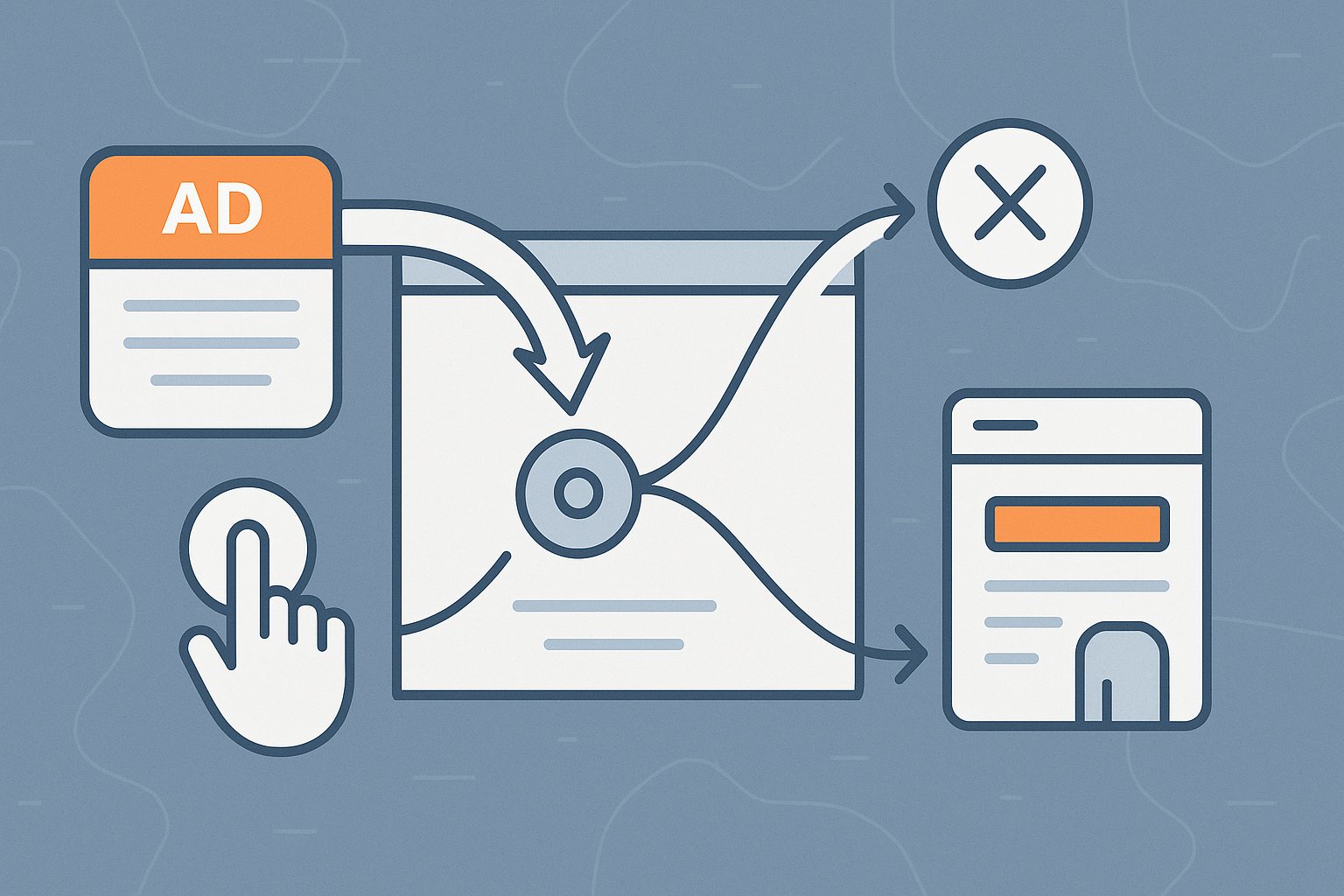
Many local businesses across the Atlanta area invest in paid ads, only to discover that the clicks do not turn into real leads. They see traffic inside Google Ads, Meta Ads, or Google Maps Ads, but very few calls or form submissions. It feels unpredictable and frustrating, and many business owners assume the ads themselves must be at fault. In most cases, the problem is not the ads. The problem is what happens after someone clicks.
This article explains the most common reasons local ad clicks fail to convert and how to fix each issue with a system that creates consistent results.
1. The Homepage or Landing Page Does Not Match the Ad
When someone clicks an ad, they expect immediate clarity. If the page is confusing, slow, or does not match the promise in the ad, visitors leave within seconds. This is one of the most common conversion problems for small businesses.
A homeowner in Marietta searching for “emergency plumbing repair” should not land on a generic homepage with no clear call to action. A visitor in Alpharetta looking for “family dentist near me” should not land on a page that talks about cosmetic services first. When the message does not match, conversion rates drop fast.
Fix this by aligning your ad headlines, value proposition, and on-page content. Visitors should feel like they landed exactly where they expected.
2. There Is No Clear or Immediate Call to Action
Most local customers want fast answers. If your website makes them search for your phone number, look for a booking button, or scroll through long sections of copy, they move on.
Your page should make it very easy to take the next step. That includes:
- clear click-to-call button
- visible “Request Quote” or “Book Appointment” button
- contact options placed above the fold
- no distractions that push visitors away from the main action
This simple structure alone improves conversions for many Atlanta service businesses.
3. The Page Does Not Build Trust Quickly Enough
Visitors make decisions based on trust. If your page shows no reviews, no real photos, and no proof of local work, they hesitate. Local customers want to see that you have completed work for people like them in their area.
Trust signals include:
- real customer reviews
- photos of actual jobs
- local service areas listed clearly
- years in business or certifications
- recognizable neighborhoods or suburbs
A simple line like “Trusted across Roswell, Dunwoody, and Sandy Springs” helps visitors feel confident.
4. Tracking Is Incomplete or Missing Important Steps
This is one of the biggest conversion failures. Many businesses think they have a conversion problem when the real problem is a tracking problem. If call tracking is not set up correctly, form events are not firing in GA4, or your phone number is not dynamic, you lose visibility into what actually works.
This makes it impossible to understand which ads produce leads and which ads waste money.
Strong tracking should include:
- call tracking numbers from tools like CallRail, CallTrackingMetrics, or Nimbata
- GA4 conversions for calls and form leads
- keyword-level insights
- separate tracking for LSAs, Maps, and Google Ads
- source-level clarity
Once tracking is structured correctly, many “conversion problems” turn out to be measurement problems.
5. The Wrong Traffic Is Clicking Your Ads
When ads match to the wrong search terms or reach people outside your ideal service area, conversions fall sharply. This is where hidden waste creeps in. A few irrelevant clicks can drain your budget, especially in competitive local markets.
Business owners usually never see the root cause. Google’s default settings match your ads to broader searches than you intended. A single overlooked search term can pull in visitors who were never real customers. The result is low intent, low relevance, and low conversions.
The fix is not simply adjusting keywords. It requires careful targeting, strong negative keyword controls, and ongoing refinement across search terms and locations.
6. The Ads, Page, and Tracking Are Not Working as One System
Most conversion issues appear when ads are set up in isolation. LSAs, Maps, and Google Ads all drive traffic differently. If your website does not support those behaviors, or if your tracking does not connect each step, you cannot identify what is working.
High-performing local businesses treat their marketing as a system:
- LSAs capture urgent, high-intent leads
- Maps capture local proximity and neighborhood searches
- Google Ads extends reach to nearby cities and specific services
- The homepage supports all three
- Tracking ties everything together
When each part works independently, performance feels unpredictable. When they work as one system, conversions become consistent and measurable.
Turn More Clicks into Real Leads with a Proven System
Most local businesses do not have a traffic problem. They have a conversion system problem. Visitors click, but the website structure, trust signals, or tracking make it hard for them to take action. Once these issues are fixed, ads become more predictable and produce a measurable return.
That is the foundation of our Resound Growth Program, which begins with the Free 21-Day Pilot. During the pilot phase, we analyze your homepage, call tracking, service-area targeting, and ad alignment to identify the gaps that block conversions. You cover the ad spend, and we handle the setup, testing, and measurement so you can see how each part of your local system performs.
If you are an Atlanta-area business owner and want your ad clicks to produce more real leads, apply for the Free 21-Day Pilot today.
