
Most professional services firms rely on referrals, word of mouth, or repeat clients. Yet almost every Atlanta-area practice still receives a steady flow of website visitors who are quietly evaluating their options. The challenge is that most of these visitors never convert. They look around, feel unsure, and leave without calling or booking an appointment.
A professional services website has a different job than a home services or retail site. It must build trust, communicate expertise, and remove friction from the intake process. Clients need confidence before they contact an attorney, dentist, CPA, therapist, consultant, or medical provider. When the website lacks clarity or credibility, visitors hesitate and move on.
Here are the core elements that help professional services websites turn visitors into booked clients.
1. Clear Positioning That Explains Who You Help
Professional services buyers want to know they are in the right place. If your homepage does not immediately explain your specialty, your ideal client, and your core value, visitors feel uncertain. A law firm in Midtown should make it clear whether they focus on family law, estate planning, or personal injury. A CPA in Buckhead should state whether they work with individuals, small businesses, or both.
Clarity reduces hesitation. It also guides visitors toward the right next step.
2. Trust Signals That Support High-Stakes Decisions
Professional services decisions carry more weight than typical local purchases. Clients want to feel confident in your expertise and reputation. This makes trust signals essential. Trust signals include:
- real client reviews
- recognizable credentials or certifications
- awards or recognitions
- professional headshots
- before and after results for relevant industries
- clear local presence or neighborhood references
A dental clinic showing five patient testimonials will outperform a clinic with none. A financial advisor who displays professional accreditations helps visitors feel safer. Trust is the single most important factor in professional services conversion.
3. Strong Bio and Team Pages
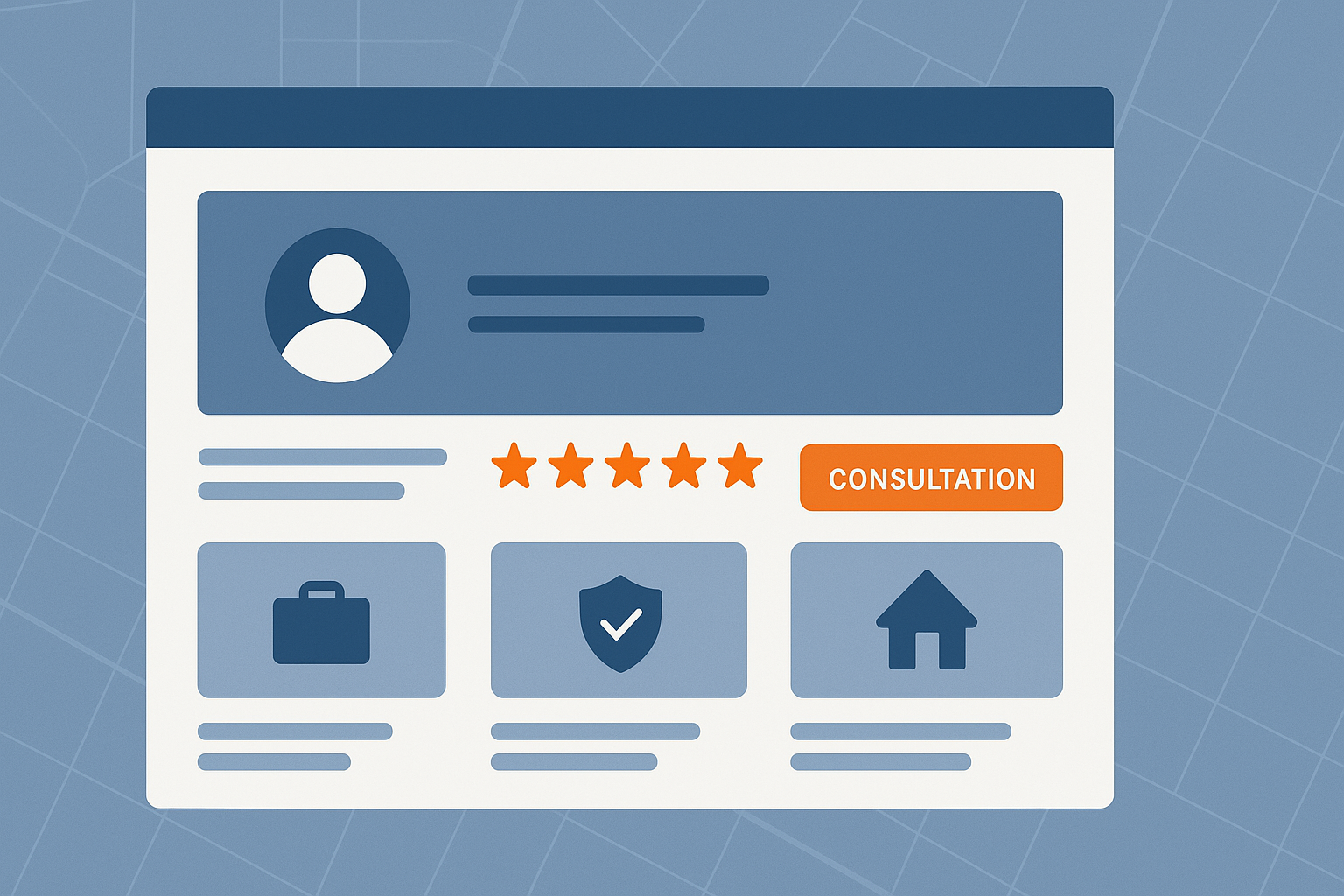
This is where professional services websites often fall short. Visitors want to see the person behind the service. They want to know your experience, education, approach, and personality. A well-structured bio page builds more confidence than any other page on the site.
A good bio page includes:
- a professional headshot
- clear credentials or qualifications
- a short personal story or mission
- specific practice areas
- links to book appointments or request consultations
For many practices, bio pages are the real conversion engine.
4. A Simple, Friction-Free Intake Flow
Intake flow can make or break conversions for professional services. Visitors need an easy path to take action. If the process feels complicated, they leave.
Your website should offer:
- a visible “Book Appointment” or “Request Consultation” button
- a short and simple intake form
- an option for phone calls and online requests
- a clear explanation of next steps
A medical practice in Sandy Springs that asks for ten form fields will lose potential patients. A law firm that clearly states “We respond within one business day” increases contact rates. Intake clarity is a major driver of conversions.
5. Service Pages That Explain Benefits, Not Just Features
Professional services buyers want outcomes. They want to understand what will happen if they work with you. A dental office that simply lists “cleanings, crowns, whitening” is not giving visitors enough reason to take action. A consulting firm that lists “strategy, operations, planning” is not showing how clients benefit.
Effective service pages should communicate:
- what the service solves
- who it is right for
- what clients can expect
- what happens during the first appointment or consultation
This level of clarity helps visitors picture themselves as clients.
6. Local Proof That Shows You Are Active in the Community
Professional services buyers often prefer someone nearby. This makes local proof helpful. It can be as simple as:
- highlighting service areas
- mentioning neighborhoods like Alpharetta, Decatur, or Brookhaven
- showing photos of the office or team
- sharing involvement in local organizations
Local proof builds familiarity and makes you feel accessible.
7. Why These Website Elements Work for Professional Services
Professional services websites convert when they reduce uncertainty and increase confidence. Visitors need to understand who you are, how you help, and why they should trust you. When these elements are in place, more visitors contact your office, request consultations, or book appointments. Most websites fail not because of design, but because the structure does not support how clients make decisions.
Turn More Visitors Into Booked Clients
Improving your professional services website can increase conversions without increasing your ad spend. Even small adjustments to your intake flow, bio pages, or trust signals can create immediate gains in booked consultations or patient appointments.
This is a key part of our Resound Growth Program, which begins with the Free 21-Day Pilot. During the pilot phase, we review your homepage, service pages, intake forms, and tracking setup to identify the changes that turn your website into a reliable source of new clients. You cover the ad spend, and we handle the setup, testing, and measurement.
If you want your practice’s website to convert more visitors into booked clients, apply for the Free 21-Day Pilot today.
